The Haunted Meeting: 7 Monsters Hiding in Your Team’s Notes (and How to Banish Them)
Ghost action items, zombie meetings, phantom decisions. A Halloween guide to the meeting habits that drain teams, and how AI meeting notes banish each one.
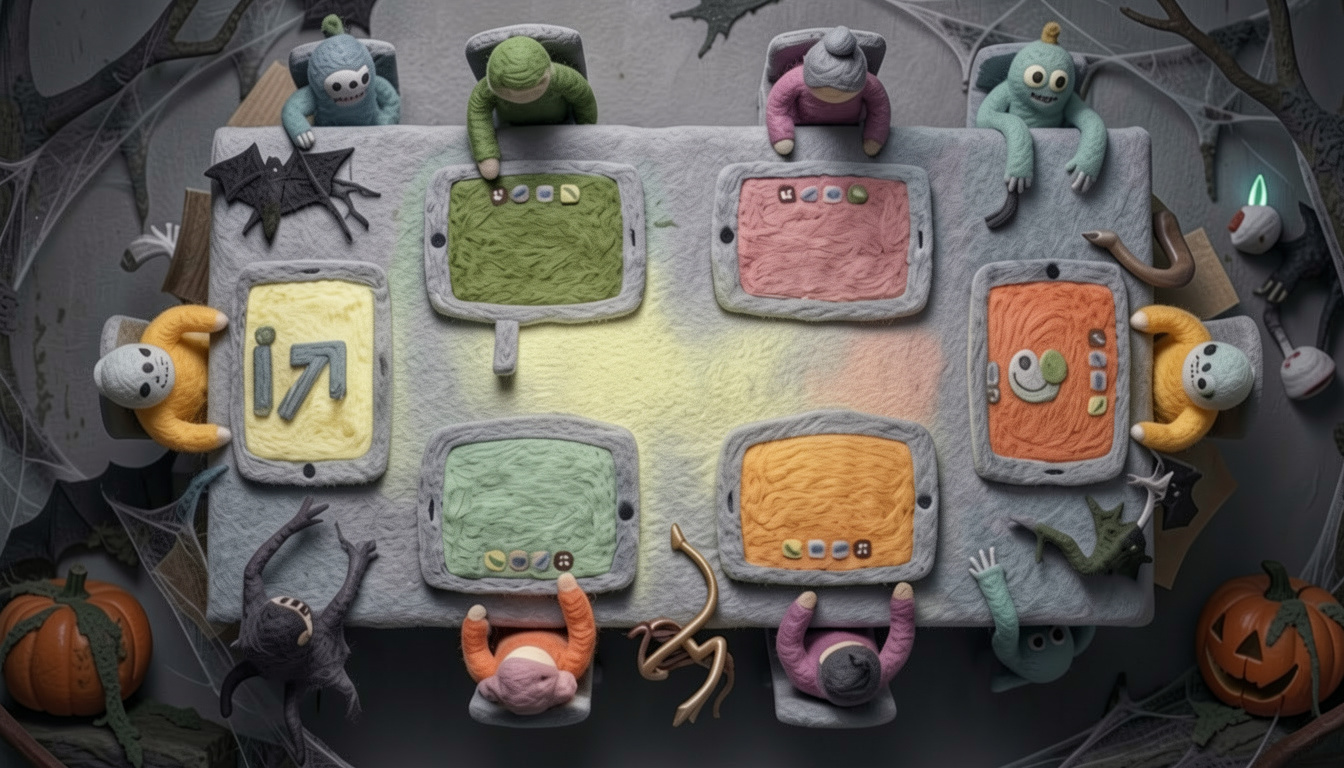
Quick answer: The scariest things in most companies aren’t ghosts. They’re meeting habits: action items nobody owns, decisions nobody remembers, recurring meetings with no purpose and notes that live in one person’s head. Each one has a simple cure: capture every meeting automatically, extract owners and deadlines in writing, and make decisions searchable for the whole team.
It’s dark. The calendar is full. Something is lurking.
Every team has heard the sounds. The faint rustle of a Slack thread asking “wait, who was doing this?” The low moan of a Monday sync that should have been an email. The chilling silence when the boss asks what the customer actually said.
These aren’t supernatural. They’re symptoms. In a Harvard Business Review survey of senior managers, 71% said meetings are unproductive and inefficient, and 65% said meetings keep them from completing their own work. The meetings themselves aren’t always the villain. Usually it’s what escapes from them.
Grab a flashlight. Here are the seven monsters most likely haunting your team’s notes, how to spot each one, and the spell that sends it back to the crypt.
The monster lineup at a glance
| Monster | How it haunts you | The banishing spell |
|---|---|---|
| The Ghost Action Item | Tasks agreed out loud, owned by nobody | Written action list with owner and date after every call |
| The Zombie Meeting | Recurring meeting that won’t die | Review a month of transcripts; cancel what produces no decisions |
| The Phantom Decision | “I thought we agreed...” | Searchable decision log |
| The Vampire Recap | Someone loses an hour writing notes | Automatic transcript and AI summary |
| The Werewolf Brief | Feedback that changes shape every week | Quote the exact words, compare rounds |
| The Mummy Archive | Notes wrapped in folders nobody opens | One searchable workspace with groups |
| The Headless Handover | Context vanishes when people leave | Shareable note history per project or client |
1. The Ghost Action Item
Sighting: “Someone should follow up with legal.” Everyone nods. Nobody does it. Two weeks later, the task floats through a status meeting, transparent and unclaimed.
Why it haunts you: spoken commitments evaporate. If an action item isn’t written down with a name and a date, it doesn’t exist.
Banishing spell: let MindNote join the call by link or calendar auto-join (see how to transcribe a meeting automatically), then run one prompt: “List every action item with owner and due date. Mark anything without an owner as UNCLAIMED.” Share it by link before people have left the call.
2. The Zombie Meeting
Sighting: a weekly meeting created in 2025 for a project that shipped in early 2026. It still shambles across eight calendars every Tuesday.
Why it haunts you: nobody wants to be the one to kill it. Atlassian has estimated that employees lose 31 hours a month to unproductive meetings.
Banishing spell: put a month of that meeting’s transcripts into one group and ask: “How many decisions or action items did these meetings produce? What topics repeat without progress?” If the answer is “almost none”, you have the evidence to cancel it, or turn it into an async update.
3. The Phantom Decision
Sighting: “I’m sure we decided to delay the launch.” “No, we decided to cut scope.” Both people are certain. Neither has proof.
Why it haunts you: decisions made verbally are remembered selectively. Each attendee walks away with their own version.
Banishing spell: keep a decision log. After key meetings, prompt: “List every decision made, who made it and the reasoning given.” Save the results in a shared “Decisions” group. When the phantom appears, search it, quote it, end the argument.
4. The Vampire Recap
Sighting: the most junior person on the call types frantically for 45 minutes, contributes nothing to the discussion, then spends another hour turning scribbles into a recap.
Why it haunts you: manual note-taking drains energy from the person doing it and attention from the meeting.
Banishing spell: let the transcript be the note-taker. Then use a summary prompt such as “Five bullets, decisions, action items, open questions” (more in our AI note-taking templates) and the recap is ready in minutes. Your note-taker gets their voice (and their evening) back.
5. The Werewolf Brief
Sighting: in Monday’s review, the client wants it “bolder”. By Thursday it should be “calmer”. Under the full moon of the final round, it should be “bold, but calm”.
Why it haunts you: feedback shifts shape when nobody records the exact words, so every round starts from someone’s memory.
Banishing spell: record reviews (with consent), then prompt: “Compare this feedback with last round’s. What changed, what contradicts, what’s resolved?” Send the contradictions back as questions before anyone redesigns anything. Agencies know this one well.
6. The Mummy Archive
Sighting: a shared drive with folders named “Notes”, “Notes NEW”, “Notes FINAL” and “Notes 2 (do not use)”. Inside: wrapped, ancient documents nobody has opened since they were buried.
Why it haunts you: knowledge that can’t be found might as well not exist. Panopto’s workplace research found employees spend 5.3 hours a week waiting for or recreating information that already exists somewhere in the company.
Banishing spell: keep meetings, voice notes, whiteboard photos (via image-to-text) and documents in one workspace, organized in a few clear groups, and rely on search instead of folder archaeology.
7. The Headless Handover
Sighting: an account manager leaves. Their replacement inherits a client, a calendar and absolutely no idea what was promised.
Why it haunts you: relationship context lives in people’s heads, and heads walk out the door.
Banishing spell: one group per client or project, with every call transcript and recap inside. Share the group by private link on day one, and the new owner reads months of context in an afternoon.
Your Halloween meeting exorcism: a 30-minute team ritual
Run this with your team the week of Halloween. Costumes optional.
- Summon the calendar (5 min). List every recurring meeting your team attends.
- Name the monsters (10 min). For each one, vote: which monster lives here?
- Cast one spell per monster (10 min). Pick the banishing spell from the table above.
- Bury one zombie (5 min). Cancel or shorten at least one recurring meeting before you leave the room.
Then let MindNote capture next week’s meetings, and check whether the haunting stopped.
Frequently asked questions
What is a zombie meeting?
A recurring meeting that continues out of habit long after its purpose has ended, producing few decisions or action items.
How do you make sure action items get done after a meeting?
Write them down with a single owner and a due date before the meeting ends, share them with all attendees, and review them at the next check-in.
How can AI help reduce unproductive meetings?
AI notetakers capture and summarize meetings automatically, extract decisions and tasks, and let you analyze transcripts over time to spot meetings that produce nothing.
Should we record every meeting?
Record meetings where decisions and commitments happen, with participant notice. Keep sensitive personal or HR conversations unrecorded unless everyone agrees.
What’s the fastest fix for bad meeting notes?
Automate capture, standardize one summary prompt, and share the recap by link right after the call.
Sources
- Perlow, Hadley & Eun, Stop the Meeting Madness, Harvard Business Review
- Atlassian, Time wasting at work infographic
- HR Dive, Inefficient knowledge sharing costs large US businesses $47M a year (Panopto)
Trick or treat? Treat your team. Banish the meeting monsters with MindNote.
Try MindNote free. Write, dictate, transcribe meetings, and organize your notes with AI.
Get startedFrequently asked questions
What is a zombie meeting?
A recurring meeting that continues out of habit long after its purpose has ended, producing few decisions or action items.
How do you make sure action items get done after a meeting?
Write them down with a single owner and a due date before the meeting ends, share them with all attendees, and review them at the next check-in.
How can AI help reduce unproductive meetings?
AI notetakers capture and summarize meetings automatically, extract decisions and tasks, and let you analyze transcripts over time to spot meetings that produce nothing.
Should we record every meeting?
Record meetings where decisions and commitments happen, with participant notice. Keep sensitive personal or HR conversations unrecorded unless everyone agrees.
What’s the fastest fix for bad meeting notes?
Automate capture, standardize one summary prompt, and share the recap by link right after the call.